Buying your first smartphone should feel exciting. Instead, most people walk into a store (or open a shopping app) and immediately freeze. RAM, chipsets, refresh rates, megapixels stacked on megapixels – it’s a wall of numbers that means nothing if nobody’s ever explained it to you in plain English.
Here’s the thing nobody tells you: you don’t need to understand all of that to pick a great phone. You just need to know what actually matters for how you’re going to use it. Let’s break it down.
Start With How You’ll Actually Use the Phone
Before you look at a single spec sheet, answer this question honestly: what will you spend most of your time doing on this phone?
- Mostly calls, texts, and WhatsApp? You don’t need a flagship.
- Heavy on photos and videos? The camera matters more than almost anything else.
- Gaming or watching a lot of YouTube? You’ll care about the screen and battery.
- Work emails and documents on the go? Battery life and storage become the priority.
I’ve watched friends spend extra money on phones with camera systems they never use, just because a salesperson talked them into it. Don’t be that person. Buy for your life, not for a spec sheet.
The Specs That Actually Matter (And the Ones You Can Ignore)
Let’s cut through the noise. Here’s what’s genuinely worth paying attention to:
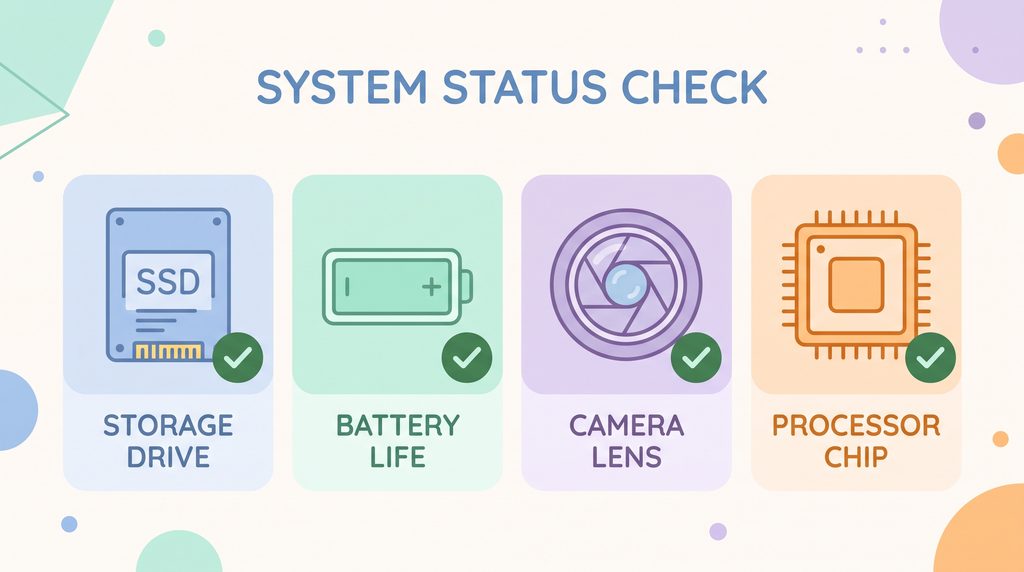
Storage. This is probably the single most important number on the box. If you take a lot of photos or download apps, go for at least 128GB. Anything less and you’ll be deleting photos within a year, which is a special kind of annoying.
Battery. Look for a battery capacity of at least 4000mAh if you’re an average user, more if you’re constantly on your phone. Reviews online will tell you real-world battery life far more honestly than the manufacturer’s claims.
Camera. More megapixels does not automatically mean better photos — this is one of the biggest myths in phone shopping. A 12MP camera with good software can easily beat a 50MP camera with poor processing. Watch a few sample photo comparisons on YouTube before you decide.
Processor. Unless you’re gaming heavily, you genuinely don’t need the newest, fastest chip. A mid-range processor from a reputable brand will handle everyday use — browsing, social media, calls — without breaking a sweat.
Now here’s what you can mostly ignore as a beginner: refresh rate (nice to have, not essential), the exact chipset model number, and whether it has “AI” branding slapped on the box. Marketing teams love that word right now, and half the time it barely changes your day-to-day experience.
New vs Refurbished: A Real Money-Saver
This might be controversial, but I’ll say it anyway — a certified refurbished phone from a trustworthy seller is often the smartest purchase you can make. You can get a phone that was flagship-level two years ago for a fraction of the original price, and honestly, it’ll still outperform a brand-new budget phone in most areas.
Just make sure the seller offers a warranty, even a short one. That’s your safety net if something’s wrong with the battery or screen.
Android or iPhone? Let’s Settle This Simply
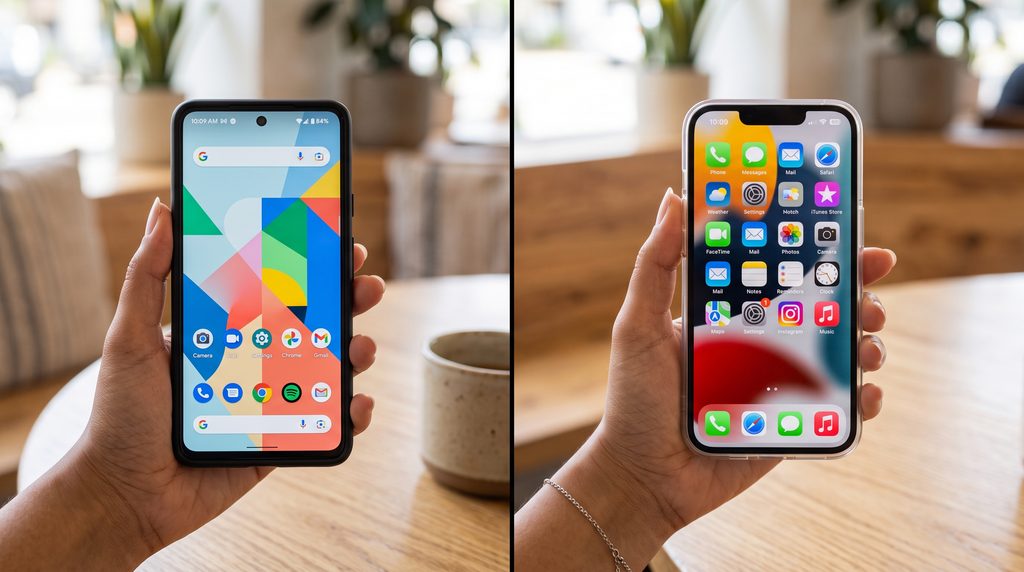
People turn this into a religious debate, but for a first-time buyer, it really comes down to two things:
- What does everyone around you use? If your family and friends are all on iPhones, iMessage and FaceTime will make your life easier. Same logic applies if everyone’s on Android.
- Budget. Android gives you far more price range flexibility — you can get a genuinely solid phone for much less than the cheapest iPhone.
There’s no wrong answer here. Both ecosystems work perfectly fine for a beginner.
A Simple Checklist Before You Buy
Before you hand over your money, run through this:
- Does it have enough storage for how you actually use your phone?
- Is the battery life rated well in real reviews, not just the manufacturer’s marketing?
- Can you actually afford the accessories too – a case, maybe a screen protector?
- Does it come with a warranty, and from where?
- Have you actually held it? Size and weight matter more than people expect, especially if you have smaller hands or will be using it one-handed a lot.
The Bottom Line
Choosing your first smartphone doesn’t have to feel like studying for an exam. Figure out how you’ll use it, prioritize storage and battery over flashy marketing terms, and don’t be afraid to consider a refurbished option if budget is tight. The “best” phone isn’t the one with the most impressive numbers – it’s the one that actually fits how you live.
Take your time, ask a tech-savvy friend to double-check your choice if you’re still unsure, and don’t let anyone rush you into a decision at the store.
Got a phone in mind already? Drop a comment and I’ll tell you honestly whether it’s a good pick for a first-timer.
Hi, this is a comment.
To get started with moderating, editing, and deleting comments, please visit the Comments screen in the dashboard.
Commenter avatars come from Gravatar.